Blog Attributes and Attribute Sets v27.1+
A blog attribute is a field of a blog post or a blog category, for example a reading time or an author. An attribute set is a list of attributes in groups. Each post and each category uses one set. The fields of the blog itself, such as Title, Image and Content, are not attributes, so the attribute grid and the sets show only the attributes that you add.
Add an attribute
- Go to System > Attributes > Blog Posts, or to Blog Categories for a category field.
- Click Add.
- Enter the Attribute Code and select the Input Type. You cannot change them later.
- On the Manage Label / Options tab, enter the label, and the options of a Dropdown or a Multiple Select.
- Click Save.
A blog attribute has one value for all store views.
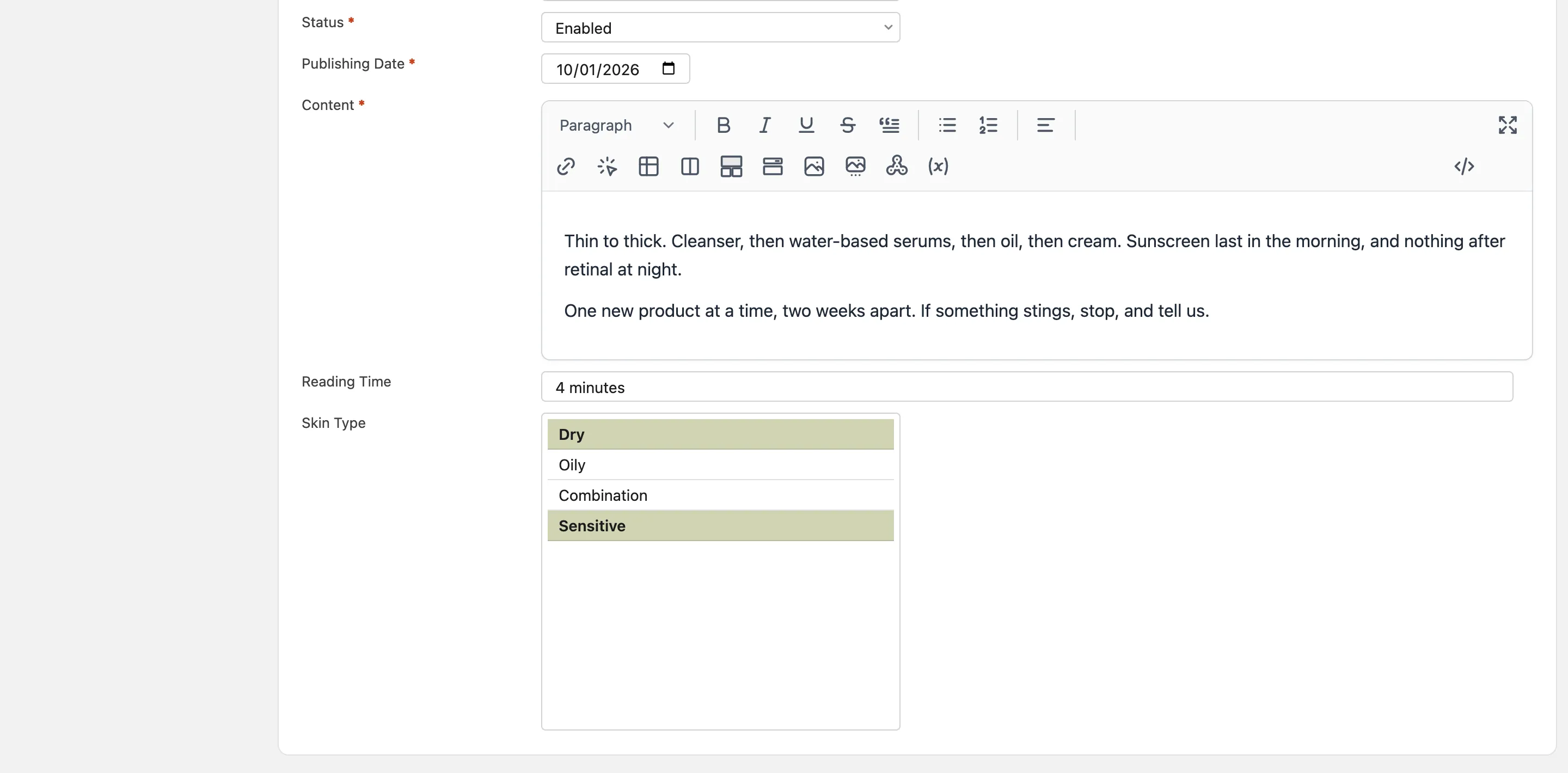
A new attribute goes into the first group of the Default set. The edit page of a post shows it at once, on the Content tab, below the fields of the blog. On a category, it shows on the General tab.
Put the attribute on a tab
- Go to System > Attributes > Blog Posts, or to Blog Categories, and click Attribute Sets.
- Click the set, for example Default.
- Drag the attribute to another group, or from Unassigned Attributes to a group. To add a group, click Add above the groups.
- Click Save.
The attributes of the first group of the set show on the Content tab of a post and on the General tab of a category. Each other group that holds an attribute is a tab of its own, with the name of the group.
When there is more than one set, a post or a category shows the Attribute Set field. When you select another set, the page shows the fields of that set at once, and keeps the values that you entered. When the new set of a saved post or category does not have some attributes of the old set, the page asks first and names them. When you save, the post or the category loses its values of these attributes.
Do not take an attribute out of a set by mistake. Every night, the store deletes the value of an attribute that is not in the set of its post or category. When a save of the set page takes an attribute out, the page asks first, and names the number of posts or categories that have a value.
Show the attribute on the storefront
Set Visible on Frontend to Yes in the Frontend Properties of the attribute. The post page or the category page then shows the attribute and its value in a table. A post with no value for the attribute does not show it.
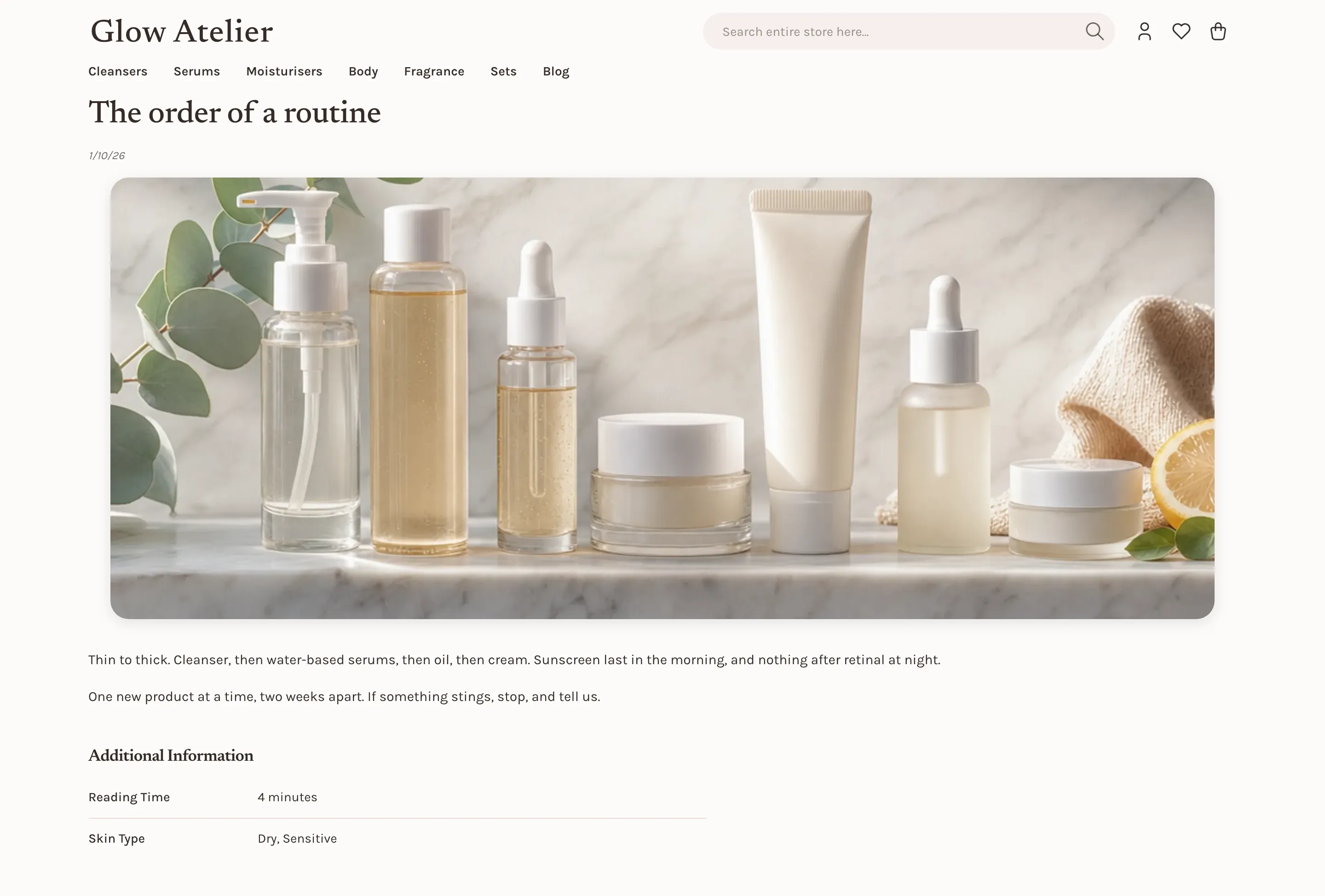
A Text Area value shows under the table, with the label of the attribute as its title, because a long text does not fit in a table.
Each group of the set is a table of its own, in the order of the groups. The table of the first group has the title Additional Information. Each other table has the name of its group, in the language of the store view. In each table, the attributes follow the order of the group. To change the order, drag the attribute in the set.
The table shows HTML when Allow HTML Tags on Frontend or Enable WYSIWYG is Yes. It removes unsafe HTML, such as a script. A code in braces, such as {{store url=""}}, works only when both settings are Yes. In other cases, the table removes the code.
Translate the name of a group
The name of a group is the title of its tab in the admin, and the title of its table on the storefront. You can give the table a different title in each language.
- On the set page, click the group, then click Rename. To make a new group, click Add.
- In Admin, enter the name that the admin shows. Two groups of one set cannot have the same name.
- In the row of each store view, enter the name in the language of that store view. If you leave a row empty, the store view shows the Admin name.
- Click Save in the window, then click Save on the set page.
Import
The blog post import reads two more kinds of columns:
_attribute_set: the name of the set of the post, as in the product import.- A column with the code of an attribute that you added. A Dropdown or a Yes/No takes the label of the option. A Multiple Select takes labels with commas between them.
An import refuses a value for an attribute that is not in the set of the post.
The API
The blog posts and blog categories of the REST and GraphQL API have two more fields. Only an admin and an API token can read and write them:
attributeSetId: the set of the post or the category. A new one without a set takes the default set. An update can change the set. The next night, the store deletes the values of the attributes that are not in the new set.customAttributes: the values of the attributes that you added, by attribute code. A write refuses a code that is not in the set of the post or the category, and a value that is not an option of a Dropdown. A new post or category must get each required attribute. A Dropdown is an option ID, a Multiple Select a list of option IDs, and a Yes/Notrueorfalse.
GET /api/rest/v2/custom-attributes?entityType=blog_post (or blog_category) lists the attributes, their options and their sets.